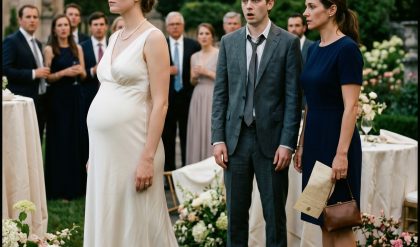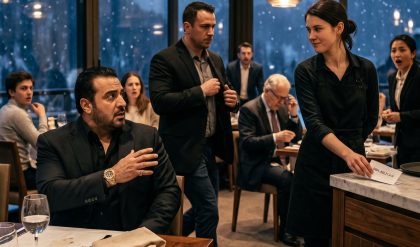
The room was so quiet I could hear the hum of the cooling fan in the projector. I looked at Arthur, who was now clutching his chest, not in a heart attack, but in a desperate, performative bid for sympathy. The pity on the faces of the guests was shifting into something colder, harder. They didn’t see a grieving wife. They saw a woman who had finally opened her eyes.
“Arthur has been meticulous in his affairs,” I continued, glancing at Meredith, who had finally looked up. Her eyes were rimmed with tears, but they weren’t tears of remorse; they were the tears of a woman who had been caught before she could reach the exit. “He kept his secrets in high-definition. But he forgot that a legacy isn’t built on what you hide in the guest cottage. It’s built on what you leave behind in the light.”
I pulled the vintage key from my pocket and dropped it onto the floor. It clattered against the marble, a small, lonely sound. “I’m not staying to see how you finish this toast, Arthur. And Julian, I suggest you don’t stay either.”
I turned and walked toward the exit. The silence broke. It shattered into a thousand jagged pieces of murmurs, gasps, and the sudden, frantic scrape of chairs against the floor. I didn’t look back. I reached the doors, the cool night air of California hitting my face like a baptism. I had expected to feel a crushing weight, a need to collapse, but I felt nothing but a hollow, singing space where my loyalty used to be.
“Eleanor!” Arthur’s voice boomed from the ballroom, desperate and decaying. “You’ll lose everything! The house, the stocks, the name!”
I stopped, my hand on the heavy brass handle of the door. I didn’t turn around. “Arthur, you already lost everything. You just haven’t realized it yet because you’ve been too busy looking at yourself in the reflection of your own lies.”
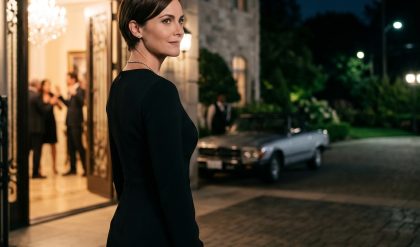
I stepped out into the garden. The smell of jasmine and damp earth was overwhelming. Behind me, the house—the site of a quarter-century of “perfection”—looked like a tomb, lit from within by the dying embers of a life I no longer recognized. I walked toward my car, a vintage convertible that had been the first thing we bought together. I remembered the day we drove it off the lot. I remembered him saying, “This car will outlast us both, Ellie. It’s built to hold the road.”
It was a lie, of course. Everything he said was a lie.
As I drove away, the engine purring a steady, unhurried rhythm, I felt the phantom weight of the ring on my finger. I pulled over to the side of the coastal road, the Pacific Ocean churning silently beneath the cliffs. I took off the diamond—the five-carat rock that had blinded me for so long—and watched it fall into the darkness. I didn’t wait to hear it hit the water.
I arrived at my sister’s place in the city hours later, my skin feeling raw, as if the last few hours had scraped off a layer of insulation I hadn’t known I was wearing. My sister, Sarah, didn’t ask questions. She simply poured two glasses of scotch and sat with me in the kitchen, the light from the streetlamp casting long, weary shadows across the linoleum.
“Is it done?” she asked, her voice soft.
“It’s finished,” I said. “But it isn’t over. He’ll fight. He’ll burn the vineyards to the ground before he lets me walk away with my share.”
“Let him burn them,” Sarah replied, handing me the glass. “You were never the one who loved the vines, Eleanor. You just loved the idea of the harvest.”
The next week was a blur of legal papers and the slow, agonizing dismantling of a life. The story had hit the press by the next morning—a headline that read like a tabloid fever dream: Vineyard Scandal: The Anniversary Toast That Ended An Empire. I read the articles with a detachment that unnerved my lawyers. I didn’t care about the board members’ shock or the investors’ panicked retreats. I cared about the silence in my own head.
Arthur tried to contact me through intermediaries, then through threats, then through a pathetic, handwritten letter that smelled of his cologne—the scent I had associated with safety for twenty-five years. “I loved you, Eleanor. The other… it was just a lapse. You know how Meredith is. She’s fragile, she’s needy. I was just trying to keep the peace between brothers.”
I burned the letter in the sink, watching the paper curl into black lace. He wasn’t sorry for the betrayal; he was sorry for the exposure. He was sorry he had been caught in a frame he couldn’t manipulate.
The trial was a circus. Arthur brought in high-priced fixers, men with teeth like razors and consciences like glass. They tried to paint me as the unstable wife, the woman who had gone off her medication, the woman who had fabricated the evidence. But the evidence was too clinical, too stark. The texts, the GPS logs, the bank transfers to the offshore account for the “renovations”—it was all there, a digital paper trail of his arrogance.
Meredith didn’t show up to court. Julian did. He sat in the back row, every day, his face a mask of stone. I didn’t speak to him. There was nothing to say. We were both victims of the same man, but our paths were fundamentally different. He had been a partner in a dream that had turned out to be a nightmare, and I had been a prop in a theater production that had finally closed its doors.
One afternoon, during a recess, Julian cornered me in the hallway. He looked ten years older than the man who had sat at my table during the gala. “She’s gone,” he said.
I didn’t ask where. I didn’t care. “I know.”
“Did you ever love him, Eleanor? Or were you just waiting for the same thing I was? To see when he’d finally break?”
I looked at him, truly looked at him, and saw the wreckage of his own self-deception. He had known, hadn’t he? Somewhere, deep down, he had known. He had just preferred the safety of the lie.
“I loved the man I thought he was,” I said, my voice steady. “But I think I loved the safety more. And that was my failure. I let him keep his secrets because it meant I didn’t have to confront my own.”
Julian looked away, his jaw tight. “I’m selling my stake in the vineyards. I’m moving to Montana. Somewhere there aren’t any vines to hide behind.”
“Good,” I said. “That’s a start.”
As the proceedings wore on, the truth became a weightless thing. I saw Arthur’s face shift from rage to bewilderment to a profound, sickening realization. He realized that the world didn’t care about his brilliance, his connections, or his legacy. It cared about the spectacle of his downfall. It was a cold comfort, but it was enough.
In the final days, the judge granted the divorce, a clean, sharp severance of everything that had been joined. I walked out of the courthouse, the sun blindingly bright, the air tasting of exhaust and possibility. I didn’t look back at the building, or at the group of reporters clamoring for a comment. I climbed into the taxi I had called, my bag packed with nothing but the essentials.
I stopped by the vineyard one last time, not to see Arthur, but to see the land. The grapes were ripening on the vines, heavy and purple, ready for the harvest. It was beautiful, in a way that had nothing to do with us. It was just nature, doing what it was designed to do, indifferent to the lives of the people who owned it.
I saw Arthur on the veranda of the main house. He looked small. His suit was rumpled, his hair unkempt, his posture sagging. He was holding a glass of wine, staring out at the rows of vines as if waiting for someone to come and fix the landscape. He didn’t see me, and I didn’t stop.
I thought about the five-carat ring at the bottom of the ocean. I thought about the vintage key. I thought about the words I hadn’t said—the words I had swallowed for two decades to keep the peace. I realized then that I wasn’t just losing my marriage; I was losing the version of myself that had been defined by it. It was a terrifying thought, but it was also the first time in twenty-five years that I felt completely, dangerously alive.
My sister was waiting for me at the airport. She had tickets to somewhere I’d never been, somewhere where nobody knew my name or the history of the Vance legacy. As we sat in the terminal, waiting for the flight, I pulled out a small notebook—the one I’d used to record the dates of his “conferences” and the costs of his “structural renovations.”
I opened to the back page, the page where I had written down the five things I’d kept in my mind as talismans of my survival: the key, the white Chanel dress, the vintage car, the ring, and the sound of his voice when he thought I wasn’t listening. They weren’t just objects anymore. They were the markers of my life.
I ripped the page out and fed it into the trash can next to me.
“Ready?” Sarah asked, her hand on my shoulder.
“I’m ready,” I said, looking out the window at the runway.
The plane took off, climbing higher and higher until the Napa Valley was nothing but a patchwork of green and brown, a tiny, insignificant detail in the vastness of the world. I didn’t feel happy. I didn’t feel relieved. I felt, for the first time, like I was starting from zero. And that was the most beautiful thing I had ever felt.
Years later, I found myself in a small bookstore in a city where the language was different and the air tasted of salt and roasted coffee. I had a new name, a new life, and a quiet, unadorned existence that belonged only to me. I was shelving books when I saw a magazine on the display table—a piece on the fall of the California wine dynasties. There was a photo of the estate. It was overgrown, the vines untended, the main house a shell of its former glory.
I read the article with a faint, ghostly curiosity. Arthur had died a few years back, alone in a house that was too big for his ego. Meredith was a footnote in the local papers, a woman who had traded her integrity for a ghost and ended up with nothing. Julian was in Montana, running a ranch that had nothing to do with wine.
I closed the magazine and turned back to the shelves. I was rearranging the section on historical biographies, my fingers brushing against the spines of books that told the stories of people who had fought, failed, and started over. I picked up a classic, something about resilience, and felt the weight of it in my hands. It wasn’t the weight of a ring or the weight of a secret. It was the weight of a choice.
A customer approached the counter, a young woman with a face that held a flicker of the same desperation I had worn for years. She looked at the books, then at me, her eyes searching for something.
“Do you have anything on starting over?” she asked. “Something real?”
I looked at her, and for a moment, I saw myself in the mirror of her gaze—the girl who thought that security was the same thing as love, the woman who believed that the truth was something to be feared rather than embraced. I leaned over the counter, my voice steady, my past a million miles away.
“I have something,” I said. “But it’s not a manual. It’s a story. And it’s not for everyone.”
She nodded, her eyes widening. “I think I’m ready.”
I walked to the back of the store, my steps light, my breath easy. The past was a landscape I had left behind, a valley of vines that had finally withered. I wasn’t the woman who had stood on that stage. I was someone else. I was the woman who had walked out of the ballroom and into the dark, and in doing so, had found the only thing that mattered: the ability to walk away.
I handed her the book, the cover worn, the pages soft with use. It wasn’t about empire or legacy or vintage wine. It was about the way the light looks when you finally stop trying to hide from it.
“Here,” I said. “Read it carefully. And remember, the story doesn’t end when the truth comes out. That’s just when the real work begins.”
She took the book, her hands steady, her expression thoughtful. As she turned to leave, the bell above the door chimed, a bright, clear sound that echoed in the quiet shop. I watched her go, a flicker of hope in her step, and knew that she, too, would eventually find her way.
The shop was quiet, the afternoon light filtering through the dust motes in the air. I returned to my work, the simple, rhythmic task of organizing stories that weren’t mine, stories that were better because they were true. I didn’t miss the empire. I didn’t miss the fame. I didn’t miss the man who had lied to me for twenty-five years.
I had everything I needed. I had my silence. I had my work. And most importantly, I had the freedom to choose what I kept and what I let go. The grapes in Napa were long gone, the wine had turned to vinegar, and the toast had long since finished. But here, in this small, quiet corner of the world, I was finally, irrevocably, my own.
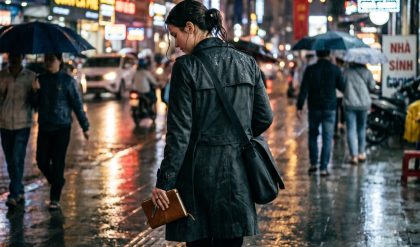
I turned the sign on the door to ‘Closed’ and walked toward the window, looking out at the city streets as they began to light up in the dusk. The world was vast, complicated, and utterly indifferent to the ghosts I had left behind. And that was the greatest gift of all. I reached for my coat, my hand brushing against the fabric, and stepped out into the night, my own life finally beginning, not with a flourish or a grand design, but with a single, quiet, and deliberate step forward into a future that was, for the very first time, entirely mine to write.
The streets were alive with the sound of evening—the distant murmur of traffic, the low, steady hum of the city, the laughter of people passing by. It was a symphony of ordinary lives, of people who had fought and survived and were simply existing in the present. I walked among them, a ghost in my own way, but a ghost that was solid and real.
I thought about the vintage car, the one I had left behind. I wondered if someone else was driving it now, someone who didn’t know the history of its leather or the secrets it had held. I hoped they were, and I hoped they were driving it fast, with the top down, toward a horizon they didn’t have to defend.
The wind picked up, cool and crisp, carrying the scent of the ocean. I walked toward the harbor, the lights of the boats reflecting in the dark water, a shimmering, chaotic dance of gold and silver. It was a beautiful, chaotic sight, a reminder that everything was constantly moving, constantly changing, and that nothing was ever truly still.
I sat on a bench, looking out at the horizon, the stars beginning to puncture the dark sky like pinpricks of light. I thought about the lessons I had learned, the ways I had broken and the ways I had mended. I realized that the pain wasn’t something to be discarded; it was a part of the architecture, a foundation upon which the rest of my life was built.
It was a cold, hard truth, but it was a truth I could live with. I took a deep breath, the salt air filling my lungs, a sharp, clean reminder of where I was and where I was going. I had left the empire behind, but I had brought the strength with me. And that was more than enough.
The night was quiet, the world vast and full of secrets, but for the first time in my life, I wasn’t looking for them. I wasn’t trying to decipher the codes or uncover the lies. I was simply here, existing in the space I had created for myself. And that was enough.
I stood up, my coat wrapped tightly around me, and walked back toward the shop, my steps firm, my gaze steady. The night was young, the future was an unwritten page, and I was the one holding the pen. And that, I realized, was the only legacy that mattered.
I locked the shop door, the sound of the key in the lock a final, definitive note in a long and complicated symphony. I walked home, the city lights guiding my way, a constant, flickering reminder of all the lives happening at once, all the secrets being kept, and all the truths waiting to be told. I didn’t care about the secrets anymore. I only cared about the truth of the present moment, the simple, undeniable reality of a life that was finally, truly mine.
The apartment was quiet, the air warm and familiar, a space that was entirely my own. I made a cup of tea, the sound of the kettle a soft, comforting hum in the stillness. I sat by the window, watching the city go to sleep, the rhythm of the night settling over the streets like a blanket.
I was finally, profoundly, at peace. The wreckage was gone, the empire was a distant memory, and the woman who had stood on that stage was a ghost of a ghost. I was someone new, someone who had been forged in the fire of her own choosing, and who was now standing on the other side, looking back at the flames with a calm, steady heart.
It was a life I had never imagined, a life that was far removed from the expectations of the world I had left behind. But it was a life that was real, a life that was honest, and a life that was mine. And as I sat there, the tea warm in my hands, the city quiet around me, I knew that I had finally, truly, come home.
The world would continue to turn, the empire would continue to crumble, and the truth would continue to be a messy, complicated thing. But I didn’t need to be the one to hold it together anymore. I just needed to hold onto myself.
And that, I realized, was the final piece of the puzzle. I was the architect of my own destruction, and I was the architect of my own salvation. And it was up to me to decide which one I was going to build. I looked out at the stars, the night sky a tapestry of stories, and felt the weight of the choice fall away, replaced by the simple, quiet rhythm of my own breath.
I was here. I was real. And I was free.
The silence of the apartment wasn’t empty; it was full, a space that was rich with the potential of a thousand different lives I could now lead. I turned off the light, the room plunging into darkness, but it was a darkness that was soft, a darkness that was kind. I closed my eyes, the rhythm of the city a soft, pulsing heartbeat in the distance, and drifted off into a sleep that was finally, mercifully, without shadows.
The morning light would come, the city would wake up, and I would begin again, a new day in a new life, a new chapter in a story that was finally, unequivocally, mine to tell. And for the first time in a very long time, I didn’t need to know how it ended. I only needed to know that I was the one who was going to write it.
The world was vast, the future was unwritten, and I was the one holding the pen. And as the night deepened, and the city breathed, I knew that I had finally, irrevocably, arrived. The journey was long, the cost was high, but the destination—the simple, unadorned truth of a life that was truly my own—was worth every single, agonizing step.
I was home. And for the first time, I wasn’t just existing; I was truly, fully, alive.
The dawn would come, the light would return, and I would be there, ready to embrace it, a woman who had walked through the fire and had emerged, not scarred, but forged in the truth of her own existence. And that was the only victory that mattered.
I turned away from the window, the apartment dark and quiet, a sanctuary of my own creation. I lay down, the silence of the night a gentle, enveloping blanket, and felt the last of the ghosts finally fade away, leaving behind only the woman who had survived them all. I closed my eyes, the steady rhythm of the city a soft, distant lullaby, and fell into a deep, dreamless sleep, the first of many I would now have the privilege of owning.
The story was over, the empire was dust, and the woman who had stood on that stage was no more. In her place was someone else, someone who had learned the hard way that truth isn’t something to be feared, but something to be lived. And as the night wore on, and the stars shifted in the sky, I knew that I was exactly where I needed to be, living a life that was finally, truly, my own.
The world would keep turning, the secrets would keep being kept, and the truth would continue to be a messy, complicated thing. But I was finally, irrevocably, free. And that was enough.